Table of Contents
- Texas Home Selling
- Which Areas in Texas Offer the Best Return on Investment and Are Easiest for Residential
- What Home Styles, Sizes, and Features Tend to Sell Fastest in the Texas Market?
- What Should Home Sellers Know About Zoning Laws, Permits, and Regulatory Requirements in Texas?
- Which Towns or Cities in Texas Are the Easiest â and Hardest â When It Comes to Navigating Real Estate Regulations?
- What Are the Most Effective Flipping and Resale Strategies for Maximizing Profit in Texas' Housing Market?
- How Should Sellers Price Their Homes to Attract Buyers While Maximizing Value in Texas?
- Which Key Economic, Social, and Regulatory Factors Are Driving Current Trends in Texas' Local Property Markets?
Texas Home Selling

Texas' housing market is driven by dynamic price trends, robust sales activity, and evolving supply-side pressures. The median sale price for homes in Texas stands at approximately $350,400, considerably lower than the national median of $440,910. Texas' median home price compares favorably with neighboring New Mexico ($373,000), but is much higher than the typical home price in Louisiana, which is estimated at about $260,000.
On average, around 30,000 homes sell each month in Texas, a 2.4% year-over-year decline that reflects a slowdown in overall activity and cooling demand. Homes in Texas spend an average of 50 days on the market, well above the national average of 38 days.
Texas leads the nation in housing development, issuing a significant portion of all U.S. single-family building permits. In 2024, the state authorized more than 225,000 new privately-owned housing units, accounting for nearly 15% of all new-home permits issued nationally.
Despite the state's attractive median price point, housing affordability is counterbalanced by a relatively high effective property tax rate of 1.58%. At nearly double the national median of 0.83%, property tax planning in Texas is a key consideration for buyers and investors.
Though the Texas housing market remains strong, its foreclosure rate of about one in every 3,313 housing units is the 10th highest nationally. This reflects a generally stable lending and ownership environment, even amid broader housing market fluctuations and certain areas — like Liberty, Johnson, and Martin counties — seeing higher rates of foreclosure.
Which Areas in Texas Offer the Best Return on Investment and Are Easiest for Residential
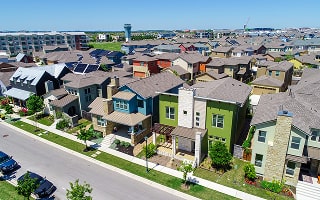
The economic diversity, favorable tax environment, and fast-growing population in Texas make the state attractive to real estate investors across the United States. However, not all parts of the state offer the same level of opportunity. From booming metropolitan hubs to smaller suburban towns, certain areas stand out for delivering strong returns on investment (ROI) in residential property and having relatively few barriers to development. These locations benefit from a mix of property-specific features, financial incentives, and regulatory frameworks that make them particularly appealing to developers, landlords, and homebuyers.
Below are some standout locations in Texas where strong appreciation potential and ease of residential development make them strategic choices for real estate investors:
- Dallas-Fort Worth Metro (Frisco and Celina): The DFW area, especially Frisco and Celina, continues to attract major employers, new residents, and investors. This area continues to experience high employment growth (11% since February 2020), enjoys Fortune 500 presence, and sees consistent 5-10 year returns (approximately 8% annually).
- Austin Suburbs (Georgetown): Located just north of Austin, Georgetown balances historical charm with rapid development. It benefits from tech-driven growth spilling over from Austin, and recent projects like the 1,400-acre Patterson Ranch are attracting buyers and developers alike. With more affordable prices than Austin proper and steady demand, it offers strong appreciation potential.
- Houston Area (Conroe): Conroe, located north of Houston, stands out for its strong rental yields and development-friendly landscape. Investors benefit from lower property prices compared to Houston's core and consistent population growth. Rental demand is robust, supported by working families and commuters, making Conroe a strategic location for long-term residential investment.
- San Antonio (Stone Oak/Northside): Stone Oak and San Antonio's northern neighborhoods are growing rapidly due to commercial expansion, new schools, and relatively affordable housing. The area's livability, access to shopping centers, and suburban feel attract families and professionals alike, making it a top target for both developers and long-term rental investors.
- Fort Worth: Fort Worth is benefiting from metro spillover, welcoming thousands of new residents yearly. It offers lower entry costs than Dallas but has similar demand trends, particularly for rentals. A diversified economy, ongoing infrastructure improvements, and zoning support for new development continue to contribute to steady home price appreciation.
- Celina: Celina has earned attention as one of the fastest-growing cities in the United States, with a reported population growth of over 140% from 2020 till now. Located north of Frisco, it offers a small-town feel with access to big-city amenities, making it especially appealing for families and remote professionals.
- Frisco: Frisco is a nationally recognized model of suburban development. Once the fastest-growing city in America, it continues to attract investment through well-planned communities, top-tier public schools, and strong job proximity via the Dallas North Tollway. Its reputation for clean zoning, economic growth, and high-income demographics makes it a particularly favorable market for long-term residential appreciation and luxury developments.
- Lubbock: Lubbock is an underrated but promising rental property market in Texas. Anchored by Texas Tech University, the city has steady rental demand from over 40,000 students, making it ideal for student housing, duplexes, and small multifamily units. The local economy, driven by healthcare, agriculture, and manufacturing, also attracts long-term renters. With a median home price of around $200,000 and average rents of roughly $1,400, investors can achieve strong cash flow by investing in rental properties in Lubbock.
- Denton (Part of DFW Region): Denton is a university town that continues to experience rapid growth driven by student housing, family migration, and increasing local employment. The presence of the University of North Texas and Texas Woman's University supports strong rental demand and year-round occupancy. Its family-oriented environment, moderate home prices, and large pool of potential renters make it ideal for long-term buy-and-hold strategies. It also benefits from being close to DFW International Airport, making it logistically attractive for new developments.
- Abilene: Abilene offers significant potential due to city-backed urban renewal initiatives and favorable property tax incentives. The downtown corridor and surrounding neighborhoods are seeing a wave of redevelopment, including mixed-use housing and commercial revitalization. Its low cost of entry allows for higher cash-on-cash returns, particularly for early investors in transitional areas. As city incentives and infrastructure investments continue, Abilene is becoming a smart pick for developers seeking long-term gains.
What Home Styles, Sizes, and Features Tend to Sell Fastest in the Texas Market?
Compared to the national average of about 40 days, the median days of the market for Texas homes is 50 days. If you're considering investing in Texas properties for future resale, it's important to understand the types of properties that tend to sell fastest in the state.
The following types of properties usually result in quicker sales in the Texas property market:
-
![]() Bedrooms: 3- to 4-bed, 2-bath single-family homes are in the highest demand as they balance affordability and functionality, often securing quick offers in suburban and metro areas like Dallas, Houston, and Austin.
Bedrooms: 3- to 4-bed, 2-bath single-family homes are in the highest demand as they balance affordability and functionality, often securing quick offers in suburban and metro areas like Dallas, Houston, and Austin.
-
![]() Size and Lot: Homes between 1,500-2,500 square feet on 0.25 to 0.5- acre lots typically sell quickly. They offer room for families, yards, and outdoor living — traits highly valued in Texas' suburban and urban fringe markets — leading to faster sales.
Size and Lot: Homes between 1,500-2,500 square feet on 0.25 to 0.5- acre lots typically sell quickly. They offer room for families, yards, and outdoor living — traits highly valued in Texas' suburban and urban fringe markets — leading to faster sales.
-
![]()
Style: The following styles tend to attract more buyers and offers in Texas:
- Ranch-style homes: Popular for buyers who prefer single-level living and open layouts.
- Modern farmhouses and Craftsman styles: These types of properties blend traditional charm with contemporary amenities, appealing to families.
- Colonial, Cape Cod, and Victorian cottages in older neighborhoods: They attract buyers seeking character and walkability.
- Urban condos/townhouses: These properties perform well in large metro areas like Austin, Dallas, and Houston, especially when near job centers and transit hubs.
-
![]() Modern Upgrades: Homes with open-concept kitchens, energy-efficient appliances, a neutral coat of fresh paint, updated bathrooms, and strong curb appeal consistently sell more quickly. These features align with buyer expectations and often reduce time on market significantly.
Modern Upgrades: Homes with open-concept kitchens, energy-efficient appliances, a neutral coat of fresh paint, updated bathrooms, and strong curb appeal consistently sell more quickly. These features align with buyer expectations and often reduce time on market significantly.


What Should Home Sellers Know About Zoning Laws, Permits, and Regulatory Requirements in Texas?

When preparing to sell a home in Texas, understanding local zoning laws, permitting requirements, and regulatory processes is essential. This is because these factors may significantly impact a property's value, marketability, and compliance status. Buyers typically request a zoning compliance letter to confirm that the property is free from violations or restrictions; any unresolved zoning issues may delay or hinder a sale. For homeowners and developers seeking to maximize ROI, verifying these legal conditions early in the process is recommended.
Zoning laws in Texas vary widely by city and county, with some jurisdictions enforcing highly detailed rules, while others are relatively relaxed. For instance, Dallas — particularly areas like Flower Mound — enforces strict zoning regulations through detailed codes covering density, setbacks, and building styles. Similarly, West Lake Hills, a suburb of Austin, applies firm restrictions through its zoning board. Variances from the requirements in these areas often require public reviews.
By contrast, certain areas in Texas offer far more flexibility. Houston, for example, is the largest city in the U.S. without formal zoning. Instead of traditional zoning codes, Houston regulates development through deed restrictions, building codes, and parking ordinances. This looser regulatory environment appeals to developers seeking fewer hurdles and faster timelines. Likewise, unincorporated counties in Texas are not legally permitted to implement zoning, although they may still regulate platting and enforce certain health and safety standards.
In some parts of the state, selling or altering a property may require more than a standard approval. Special use permits — regularly subject to public hearings and zoning board approval — are mandatory in select areas. A notable example is Starbase, a newly incorporated community near SpaceX's facilities in South Texas. In the community, zoning rules govern mixed-use and industrial land changes, and developers are required to go through formal channels before proceeding.
Many jurisdictions also require a certificate of occupancy (CO) to legally occupy or sell a property after significant renovation or new construction. In Austin, for example, all new residential structures must pass inspection and receive a CO before they can be listed or inhabited. Fort Worth follows a similar protocol, requiring updated certificates for any change in use or tenancy.
Sellers of homes located in designated historic districts face additional oversight. In areas such as Dallas' Kings Highway Conservation District, any exterior alterations, replacements, or renovations must conform to strict architectural standards and obtain approval from the local historic commission. Similarly, in Georgetown, located north of Austin, sellers must apply for a Certificate of Appropriateness before making visible changes to homes in historic zones to ensure the city's historical heritage is preserved.
Which Towns or Cities in Texas Are the Easiest — and Hardest — When It Comes to Navigating Real Estate Regulations?

To avoid legal setbacks and preserve property value, it's important to be aware of and comply with local real estate regulations in Texas. Understanding whether an area is development friendly, moderately regulated, or highly restrictive — or how factors like zoning and preservation vary — is crucial for a smooth project or investment path.
Development-Friendly Areas

Some parts of Texas are known for their pro-growth disposition and minimal regulatory requirements, which appeal to investors and home builders seeking fewer bureaucratic delays and reduced costs associated with permitting, rezoning, and inspections. For example, Houston is widely known as the largest city in the United States without a formal zoning code, relying instead on deed restrictions, building standards, and infrastructure requirements. This gives developers a high level of flexibility when planning new projects, especially on vacant or unencumbered lots. The absence of strict zoning allows for mixed-use development and quicker turnaround times from concept to construction. However, developers should note that Houston still enforces drainage, parking, and utility ordinances that must be considered.
In Midland, residential development has expanded rapidly due to strong demand and local government support. Permitting processes are generally streamlined, and zoning changes are not as heavily scrutinized as in urban cores like Austin. Similarly, Bridgeland, a master-planned community in Harris County, encourages new construction through structured, developer-friendly oversight that emphasizes growth and livability.
Moderately Regulated Areas

Other jurisdictions in Texas impose a middle ground, where regulation exists but isn't excessively restrictive. Cities such as Round Rock, Plano, and The Colony maintain organized zoning codes and enforce building standards, but are typically efficient and business-friendly in their permitting approach. Developers are required to strictly follow the outlined rules, but the process is predictable and transparent.
For example, in Round Rock, developers working on new mixed-use or residential projects must navigate zoning classifications and occasional public hearings, particularly in growing corridors like East Palm Valley Boulevard. However, the city actively supports development by offering clarity in the process and encouraging investment through planned growth zones.
Similarly, suburban areas around Dallas-Fort Worth, such as Allen or Mansfield, have adopted moderately strict regulations. These often include design standards, landscaping rules, and development impact fees, which aim to guide sustainable development rather than discourage new housing.
Highly Restrictive or Bureaucratic Areas

In contrast, several locations in Texas are much more restrictive, either due to formal legal frameworks or strong local opposition to change. West Lake Hills, an affluent suburb near Austin, enforces stringent zoning rules, requires variances for seemingly minor modifications, and is known for its extensive public hearing process. High-profile cases, including Elon Musk's request to alter a fence on his property, have faced delays due to strict interpretations of local ordinances.
Historic districts in cities like Dallas, such as the Kings Highway Conservation District, also require approval from preservation boards for exterior changes. This may significantly lengthen renovation timelines and restrict materials or design options to maintain a historical aesthetic.
In these areas, development is still possible, but sellers and builders must be prepared for lengthy permitting processes, design limitations, and, in some cases, resistance from community members or preservation advocates. Consequently, this leads to longer project timelines, additional costs, and more uncertainty.
Regulatory Climate Factors to Watch

Each municipality in Texas operates under its own set of land use rules, building codes, and development policies, making for a nonuniform regulatory climate in the state. These factors play a crucial role in determining how easy or difficult it is to build, renovate, or flip a property. Hence, a project that proceeds smoothly in one city may face delays, additional costs, or legal barriers in another.
Below is a summary of key regulatory factors that commonly influence residential real estate projects in Texas, along with where these factors are most relevant:
| Factor | Impact on Development | Where It's Found |
|---|---|---|
| Zoning Flexibility | Determines how easily a property's use can be changed or expanded | High in Houston, Midland, and Bridgeland; moderate in Round Rock and Plano |
| Historic Preservation Laws | Requires approval for exterior changes, limits design flexibility | Dallas historic districts, Georgetown, West Lake Hills |
| Wetlands/Conservation | Reduces buildable land, adds permitting layers and environmental reviews | Coastal Harris County, Montgomery County, Lake Travis area |
| Inclusionary Zoning | Requires developers to include affordable housing units | Austin (The Domain, East Austin), parts of Round Rock |
| Building Code Enforcement | Affects project costs and timelines through inspections and compliance | Stricter in Austin, Dallas-Fort Worth, and San Antonio |
| Local Politics/NIMBYism* | Community resistance can block or delay housing projects | High in West Lake Hills, Austin suburbs, and Dallas conservation zones |
*NIMBYism - Not in My Backyard
What Are the Most Effective Flipping and Resale Strategies for Maximizing Profit in Texas' Housing Market?

Flipping homes in Texas can be profitable, but success depends on choosing the right strategies for the state's diverse and shifting real estate market. With varying demand, regulations, and price trends across regions, flippers must tailor their approach based on location and current market conditions. Below are some of the most effective home flipping and resale strategies that align with prevailing trends in key Texas cities and towns:
-
![]() Targeting Distressed or Foreclosed Homes: Targeting distressed properties, such as homes in pre-foreclosure, at auction, or listed as bank-owned (REO), is a popular flipping strategy. These properties are often priced well below market value, offering experienced investors the opportunity to purchase at a discount, rehabilitate, and resell for a profit. This approach works particularly well in larger markets like Dallas, Houston, and San Antonio, where the volume of distressed inventory provides a steady stream of opportunities and competition remains healthy but manageable.
Targeting Distressed or Foreclosed Homes: Targeting distressed properties, such as homes in pre-foreclosure, at auction, or listed as bank-owned (REO), is a popular flipping strategy. These properties are often priced well below market value, offering experienced investors the opportunity to purchase at a discount, rehabilitate, and resell for a profit. This approach works particularly well in larger markets like Dallas, Houston, and San Antonio, where the volume of distressed inventory provides a steady stream of opportunities and competition remains healthy but manageable.
-
![]() Using the 70% Rule: The 70% Rule advises that a flipper pays no more than 70% of a property's after-repair value (ARV), minus the cost of repairs. This helps investors maintain a buffer against unexpected expenses or market shifts. The rule is especially useful in Dallas-Fort Worth and Houston, where property values and rehab costs are relatively stable and transparent, making it easier to apply the formula accurately.
Using the 70% Rule: The 70% Rule advises that a flipper pays no more than 70% of a property's after-repair value (ARV), minus the cost of repairs. This helps investors maintain a buffer against unexpected expenses or market shifts. The rule is especially useful in Dallas-Fort Worth and Houston, where property values and rehab costs are relatively stable and transparent, making it easier to apply the formula accurately.
-
![]() Wholetailing for Speed: Wholetailing involves purchasing a property that only needs minor cosmetic updates, such as fresh paint, new fixtures, or landscaping, before putting it back on the market. Unlike a full rehab, this strategy focuses on speed, allowing the investor to resell quickly and avoid holding costs. It's best suited for fast-moving suburban markets like Round Rock and the outer suburbs of Dallas-Fort Worth, where demand from first-time homebuyers and busy professionals is high.
Wholetailing for Speed: Wholetailing involves purchasing a property that only needs minor cosmetic updates, such as fresh paint, new fixtures, or landscaping, before putting it back on the market. Unlike a full rehab, this strategy focuses on speed, allowing the investor to resell quickly and avoid holding costs. It's best suited for fast-moving suburban markets like Round Rock and the outer suburbs of Dallas-Fort Worth, where demand from first-time homebuyers and busy professionals is high.
-
![]() Using the Buy, Rehab, Rent, Refinance, Repeat Method (BRRRR): The BRRRR strategy combines flipping with long-term rental investment. Investors buy and renovate a property, rent it out, then refinance to recover their capital and repeat the process. This model builds equity while generating ongoing cash flow. It's especially effective in rental-friendly markets such as Houston, San Antonio, and Corpus Christi, where rental demand remains strong and refinancing conditions are favorable for investors looking to scale over time.
Using the Buy, Rehab, Rent, Refinance, Repeat Method (BRRRR): The BRRRR strategy combines flipping with long-term rental investment. Investors buy and renovate a property, rent it out, then refinance to recover their capital and repeat the process. This model builds equity while generating ongoing cash flow. It's especially effective in rental-friendly markets such as Houston, San Antonio, and Corpus Christi, where rental demand remains strong and refinancing conditions are favorable for investors looking to scale over time.
-
![]() Micro-Flipping (Digital Wholesaling): Micro-flipping uses real estate technology and data platforms to buy and quickly resell homes, often with minimal or no renovations. This strategy relies on accurate valuation tools, fast transaction platforms, and a keen eye for market arbitrage. Micro-flipping is gaining traction in high-volume markets like Houston and Dallas, where robust listing data and investor activity make fast deals more feasible.
Micro-Flipping (Digital Wholesaling): Micro-flipping uses real estate technology and data platforms to buy and quickly resell homes, often with minimal or no renovations. This strategy relies on accurate valuation tools, fast transaction platforms, and a keen eye for market arbitrage. Micro-flipping is gaining traction in high-volume markets like Houston and Dallas, where robust listing data and investor activity make fast deals more feasible.
-
![]() Value-Add Flipping (Beyond Cosmetic Work): Value-add flipping goes beyond surface-level improvements by increasing a property's functional space or usage. Examples include converting a single-family home into a duplex, adding an extra bedroom or bathroom, or expanding the square footage. These structural improvements may significantly increase resale value. This strategy works best in areas like Frisco, Celina, and parts of San Antonio, where zoning flexibility allows for such enhancements and buyer demand supports the added value.
Value-Add Flipping (Beyond Cosmetic Work): Value-add flipping goes beyond surface-level improvements by increasing a property's functional space or usage. Examples include converting a single-family home into a duplex, adding an extra bedroom or bathroom, or expanding the square footage. These structural improvements may significantly increase resale value. This strategy works best in areas like Frisco, Celina, and parts of San Antonio, where zoning flexibility allows for such enhancements and buyer demand supports the added value.
-
![]() Auction and Off-Market Purchasing: Buying homes at auctions or through off-market deals is another way to access deeply discounted properties. These channels include courthouse auctions, tax lien sales, and direct-to-seller negotiations. Investors using this strategy often gain a competitive edge by avoiding traditional MLS competition. Areas like Houston, Dallas, and Tarrant County frequently host property auctions and are known for having a healthy supply of off-market leads for savvy investors.
Auction and Off-Market Purchasing: Buying homes at auctions or through off-market deals is another way to access deeply discounted properties. These channels include courthouse auctions, tax lien sales, and direct-to-seller negotiations. Investors using this strategy often gain a competitive edge by avoiding traditional MLS competition. Areas like Houston, Dallas, and Tarrant County frequently host property auctions and are known for having a healthy supply of off-market leads for savvy investors.
-
![]() Renovating with Quality (Don't Cut Corners): Investing in durable materials, professional workmanship, and modern design features — such as open layouts, updated kitchens, and neutral finishes — helps properties stand out and sell faster at top dollar. This approach is effective statewide, but especially valuable in competitive markets like Austin, Dallas, and San Antonio, where buyers are willing to pay more for homes that feel new, functional, and move-in ready.
Renovating with Quality (Don't Cut Corners): Investing in durable materials, professional workmanship, and modern design features — such as open layouts, updated kitchens, and neutral finishes — helps properties stand out and sell faster at top dollar. This approach is effective statewide, but especially valuable in competitive markets like Austin, Dallas, and San Antonio, where buyers are willing to pay more for homes that feel new, functional, and move-in ready.


How Should Sellers Price Their Homes to Attract Buyers While Maximizing Value in Texas?

When selling a home in Texas, it's a good idea to collaborate with a local real estate agent or licensed appraiser who can analyze active, pending, and recently sold comparables within the last 90 days. This allows you to establish a solid, market-based listing price and attract buyers while still maximizing value.
If you're looking to sell your Texas home quickly and maximize value, the following pricing strategies may be useful:
-
![]() Pricing Just Below Market Thresholds: Listing a home just under a key round number — for example, $699,900 instead of $700,000 — may significantly boost views, foot traffic, and online engagement. This tactic is particularly effective in suburban and entry-level markets, where buyers are highly price-sensitive.
Pricing Just Below Market Thresholds: Listing a home just under a key round number — for example, $699,900 instead of $700,000 — may significantly boost views, foot traffic, and online engagement. This tactic is particularly effective in suburban and entry-level markets, where buyers are highly price-sensitive.
-
![]() Charm Pricing (Psychological Pricing): Charm pricing ends in odd numbers like $299,995, creating the perception of a bargain. This is most effective in mid-tier suburbs like Round Rock, Frisco, and Sugar Land, where buyers are comparison shopping and respond to subtle pricing triggers.
Charm Pricing (Psychological Pricing): Charm pricing ends in odd numbers like $299,995, creating the perception of a bargain. This is most effective in mid-tier suburbs like Round Rock, Frisco, and Sugar Land, where buyers are comparison shopping and respond to subtle pricing triggers.
-
![]() Pricing to Create a Bidding War: In strong seller's markets, especially among homes located in the sought-after Dallas Independent School District, Southlake, or West University Place, listing slightly below perceived market value may generate multiple offers.
Pricing to Create a Bidding War: In strong seller's markets, especially among homes located in the sought-after Dallas Independent School District, Southlake, or West University Place, listing slightly below perceived market value may generate multiple offers.
-
![]() High-Anchor Pricing (Testing the Top): Unique or luxury properties, such as hill country estates in Boerne or custom homes in The Woodlands, benefit from high-anchor pricing. Listing at the top of the spectrum builds room for negotiation while projecting premium quality.
High-Anchor Pricing (Testing the Top): Unique or luxury properties, such as hill country estates in Boerne or custom homes in The Woodlands, benefit from high-anchor pricing. Listing at the top of the spectrum builds room for negotiation while projecting premium quality.
-
![]() Price-Per-Square-Foot Benchmarking: In developments with similarly sized homes, like cookie-cutter subdivisions in Dallas-Fort Worth or Austin condos, benchmarking by price-per-square-foot ensures your listing aligns with neighborhood norms and meets buyer expectations.
Price-Per-Square-Foot Benchmarking: In developments with similarly sized homes, like cookie-cutter subdivisions in Dallas-Fort Worth or Austin condos, benchmarking by price-per-square-foot ensures your listing aligns with neighborhood norms and meets buyer expectations.
-
![]() Appraisal-Backed Pricing: For sellers working with buyers using government-backed mortgages or conventional loans, pricing close to the expected appraised value helps minimize appraisal shortfalls. This approach tends to work best in smaller metros like Corpus Christi or Amarillo, where appraisal variability may be higher.
Appraisal-Backed Pricing: For sellers working with buyers using government-backed mortgages or conventional loans, pricing close to the expected appraised value helps minimize appraisal shortfalls. This approach tends to work best in smaller metros like Corpus Christi or Amarillo, where appraisal variability may be higher.
-
![]() Net-to-Seller Pricing: This method factors in closing costs, commissions, taxes, and staging fees, helping sellers understand exactly how much they'll receive at closing. It's especially useful in buyer-leaning markets like San Antonio or Austin, where accurate net projections allow for realistic pricing.
Net-to-Seller Pricing: This method factors in closing costs, commissions, taxes, and staging fees, helping sellers understand exactly how much they'll receive at closing. It's especially useful in buyer-leaning markets like San Antonio or Austin, where accurate net projections allow for realistic pricing.
-
![]() Urgency Pricing (Motivated Seller Strategy): When selling due to pre-foreclosure, relocation, or an estate sale, aggressive pricing below market may expedite the process. This strategy is common in fast-growing exurbs and secondary markets like Lubbock or Abilene, where speed outweighs maximum profit.
Urgency Pricing (Motivated Seller Strategy): When selling due to pre-foreclosure, relocation, or an estate sale, aggressive pricing below market may expedite the process. This strategy is common in fast-growing exurbs and secondary markets like Lubbock or Abilene, where speed outweighs maximum profit.


The table below outlines key pricing strategies commonly used by Texas home sellers, and how investors can choose the best strategy based on current market conditions:
| Market Condition | Best Strategy |
|---|---|
| Seller's Market | Underpricing to spark a bidding war |
| Buyer's Market | Charm pricing or net-to-seller |
| Unique, luxury home | High-anchor with value justification |
| Entry-level home | Just below the market threshold |
| Urgent sale needed | Aggressive urgency pricing |
| Flipper or investor listing | Appraisal-backed or price-per-square-foot benchmarking |
Which Key Economic, Social, and Regulatory Factors Are Driving Current Trends in Texas' Local Property Markets?

Texas' property markets are shaped by a rich mix of economic, demographic, regulatory, and market forces, each varying significantly across regions. These drivers influence both demand and supply, making them important for investors and developers to understand.
![]() Economic Factors
Economic Factors
 Economic Factors
Texas' strong job market continues to fuel housing demand, particularly in metros like Dallas-Fort Worth, Houston, and Austin. Since 2020, DFW alone has seen over 11% employment growth, with wage gains and business relocations sustaining a steady inflow of new residents. The state also leads the nation in residential construction permits, accounting for roughly 15% of all new-home permits issued in the U.S. in 2024.
![]() Demographic and Social Factors
Demographic and Social Factors
 Demographic and Social Factors
Rapid population growth and urban migration continue to reshape Texas' housing landscape. The state is gaining over half a million residents annually — largely from California, the Midwest, and international arrivals — and is on track to become the most populous state by 2045. Cities along the I-35 corridor, including Austin and San Antonio, are projected to add several million more residents by 2030. Age demographics are also shifting, with senior renters rising by over 80% in Austin and 60% in Houston, reflecting a growing trend of older adults opting for rental living over homeownership. These trends are creating demand for a diverse mix of housing types, from affordable starter homes to high-quality rental units.
![]() Regulatory and Legal Framework
Regulatory and Legal Framework
 Regulatory and Legal Framework
Local zoning and land-use laws continue to shape where and how housing is built in Texas. Houston stands out with no formal zoning code, allowing greater development flexibility, while many suburbs adopt stricter density and use regulations. Austin recently passed new code amendments allowing triplex construction on single-family lots, signaling a shift toward higher-density housing solutions. Meanwhile, inclusionary zoning policies and relaxed parking requirements in select cities aim to increase affordability.
![]() Taxation and Fiscal Policy
Taxation and Fiscal Policy
 Taxation and Fiscal Policy
Texas' lack of a state income tax continues to attract businesses and high-income earners, boosting real estate demand. However, rising home values are increasing property tax burdens for many residents. This has prompted a surge in protests over property assessments and created pressure for tax reforms. While Texas does not impose a real estate transfer tax or capital gains tax at the state level, the high local property taxes make it critical for investors and sellers to calculate true net proceeds and plan transactions accordingly.
![]() Housing Policy and Government Programs
Housing Policy and Government Programs
 Housing Policy and Government Programs
Housing supply shortages have prompted reforms in several Texas cities. Municipalities like Austin and Dallas have updated development codes to allow more units per lot, ease permitting restrictions, and encourage infill housing. In the suburbs, master-planned communities such as those in Celina, Frisco, and Bridgeland partner with local utility and tax districts to streamline infrastructure development and support fast, large-scale residential growth.
![]() Infrastructure and Development Trends
Infrastructure and Development Trends
 Infrastructure and Development Trends
Texas' commitment to major infrastructure expansion continues to drive real estate growth. The AI and data center boom in areas like Abilene and North Texas is creating new employment hubs and raising housing demand in secondary markets. Additionally, Frisco and Celina are undergoing massive growth spurred by new roads, transit access, and regional planning, which is opening up new areas for residential development.
![]() Market Sentiment and Investor Behavior
Market Sentiment and Investor Behavior
 Market Sentiment and Investor Behavior
Market sentiment across Texas is mixed, with cautious optimism among buyers and continued strong activity from investors. Institutional investors are particularly active in metros like Houston, where they own up to 10% of the single-family rental market. However, growing public concern over institutional homeownership is prompting legislative debates aimed at limiting bulk investor purchases. Overall, investor strategies are becoming more localized, targeting areas with favorable permitting, population growth, and price stability.
Texas continues to distinguish itself as one of the most dynamic and opportunity-rich real estate markets in the United States. With a fast-growing population, business-friendly tax policies, and a wide range of development environments, the state presents significant potential for residential property investors, developers, and home sellers alike.
Success in the Texas housing market depends heavily on understanding the specific conditions in each local area. These conditions range from regulatory and pricing strategies to construction trends and demographic shifts. Cities like Frisco, Celina, Georgetown, and Conroe offer high growth potential and strong returns, while markets like Abilene and Lubbock provide attractive entry points with robust rental potential.
Still, it's crucial for sellers and flippers to price intelligently, navigate local permitting rules, and match property styles to buyer demand. From zoning laws and infrastructure planning to investor sentiment and government policies, multiple factors combine to shape outcomes in each transaction.
So, whether you're building, flipping, or selling, informed decisions based on local data, market trends, and regulatory awareness are key to maximizing ROI and long-term success in Texas' competitive real estate landscape.
Table of Contents
- Texas Home Selling
- Which Areas in Texas Offer the Best Return on Investment and Are Easiest for Residential
- What Home Styles, Sizes, and Features Tend to Sell Fastest in the Texas Market?
- What Should Home Sellers Know About Zoning Laws, Permits, and Regulatory Requirements in Texas?
- Which Towns or Cities in Texas Are the Easiest â and Hardest â When It Comes to Navigating Real Estate Regulations?
- What Are the Most Effective Flipping and Resale Strategies for Maximizing Profit in Texas' Housing Market?
- How Should Sellers Price Their Homes to Attract Buyers While Maximizing Value in Texas?
- Which Key Economic, Social, and Regulatory Factors Are Driving Current Trends in Texas' Local Property Markets?