Your Guide to Construction, Renovation, and Zoning Laws in Texas

Investing in property can be a lucrative way to make money. However, Texas has many property-related regulations regarding construction, renovation, and zoning that you need to know about. Texas has 9,722,479 residential properties and 717,879 commercial properties. According to the U.S. Census Bureau, Texas has 12,395,364 housing units.
Property-related laws fall into two general categories: state-level and local (town/city/county/municipality). Each state divides property law responsibilities between these two entities; some laws fall to the state and others to local government. Under each main category, there are many different rules and regulations to review. Texas is a "Home Rule State", meaning that local jurisdictions have a lot of control over the codes they adopt and modify.
State Level (Regulations & Codes)

Most of Texas's building codes are localized. However, the state bases its building standards on the International Code Council's (ICC) model codes. Texas relies on the International Building Code (IBC), the 2015 International Residential Code (IRC), and other codes that local jurisdictions must comply with.
Texas also has an energy conservation code based on the 2015 International Energy Conservation Code (IECC), which is adjusted for energy efficiency in new and renovated buildings.
Texas's foundational building codes, which sprout at the state level and are modified by local jurisdictions, include:
-
![]() International Building Code (IBC): This code governs the building design and construction.
International Building Code (IBC): This code governs the building design and construction.
-
![]() International Residential Code: These laws relate to residential construction and renovations.
International Residential Code: These laws relate to residential construction and renovations.
-
![]() International Fire Code: This law focuses on building fire safety.
International Fire Code: This law focuses on building fire safety.
-
![]() International Plumbing Code: Rules about plumbing design and installation.
International Plumbing Code: Rules about plumbing design and installation.
-
![]() International Mechanical Code: This code addresses the installation and safety of installed systems like HVAC.
International Mechanical Code: This code addresses the installation and safety of installed systems like HVAC.
-
![]() National Electrical Code: Governs electrical installations, safety, and efficiency.
National Electrical Code: Governs electrical installations, safety, and efficiency.


Construction
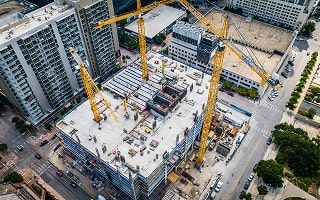
Texas construction laws vary quite a bit, covering a lot of ground, including licensing and registration, building codes and permits, contract requirements and disputes, prompt payment and lien rights, public projects, construction defect liability, and construction zone regulations.
Construction laws are widely decentralized in Texas, meaning that they are split between the state and local jurisdictions. The Texas Department of Licensing and Regulation (TDLR) oversees industrialized buildings, and local towns, cities, and counties enforce their own building codes based on the International Residential Code (IRC).
Some of the key construction laws in Texas include:
-
![]() Licensing: Texas does not require state licensing for general contractors. However, specialty workers like plumbers, HVAC professionals, and electricians must be licensed. Some cities do require licensing for contractors.
Licensing: Texas does not require state licensing for general contractors. However, specialty workers like plumbers, HVAC professionals, and electricians must be licensed. Some cities do require licensing for contractors.
-
![]() Building Permits: Most buildings, except sheds, decks, and fences, require permits for new construction and renovations. Texas sets the minimum building code standards, and the local level may increase or decrease those standards. Texas uses the IRC for its minimum building standards.
Building Permits: Most buildings, except sheds, decks, and fences, require permits for new construction and renovations. Texas sets the minimum building code standards, and the local level may increase or decrease those standards. Texas uses the IRC for its minimum building standards.
-
![]() Contract Requirements & Disputes: Texas contracts for residential property renovations require specific disclosures, including a Residential Disclosure Statement and information about any subcontractors used. Homeowners who wish to file a lawsuit against a contractor for defective workmanship must comply with the guidelines outlined in Chapter 27 of the Texas Property Code.
Contract Requirements & Disputes: Texas contracts for residential property renovations require specific disclosures, including a Residential Disclosure Statement and information about any subcontractors used. Homeowners who wish to file a lawsuit against a contractor for defective workmanship must comply with the guidelines outlined in Chapter 27 of the Texas Property Code.
-
![]() Prompt Payment and Lien Rights: Texas mandates prompt payments (with specific timelines) for construction work on private projects as outlined in the Texas Prompt Payment Act. Contractors and suppliers may file a mechanic's lien to secure payment if issues arise.
Prompt Payment and Lien Rights: Texas mandates prompt payments (with specific timelines) for construction work on private projects as outlined in the Texas Prompt Payment Act. Contractors and suppliers may file a mechanic's lien to secure payment if issues arise.
-
![]() Public Projects: Public construction projects must follow the rules within the Fair and Open Competition Act (FOCA). This act prohibits Project Labor Agreements (PLAs) on public projects, ensuring that all qualified contractors have a fair shot.
Public Projects: Public construction projects must follow the rules within the Fair and Open Competition Act (FOCA). This act prohibits Project Labor Agreements (PLAs) on public projects, ensuring that all qualified contractors have a fair shot.
-
![]() Construction Defect Liability: Chapter 59 of the Texas Business and Commerce Code talks about liability issues in construction defects due to design, shifting some of the risk away from contractors. This law also contains rules for deadlines for filing claims, and contractors are only responsible for their own work, not the design.
Construction Defect Liability: Chapter 59 of the Texas Business and Commerce Code talks about liability issues in construction defects due to design, shifting some of the risk away from contractors. This law also contains rules for deadlines for filing claims, and contractors are only responsible for their own work, not the design.
-
![]() Construction Zone Regulations: Laws regarding drivers who travel near construction sites require them to reduce their speed and yield to construction vehicles.
Construction Zone Regulations: Laws regarding drivers who travel near construction sites require them to reduce their speed and yield to construction vehicles.


Commercial Structures

Texas bases its commercial building codes on the International Building Code (IBC) and the International Energy Conservation Code (IECC). However, local jurisdictions can adopt later versions or more stringent codes. Along with the IHB code, contractors must also comply with the International Existing Building Code (IEBC). New construction must follow the Texas Minimum Construction Standards.
Residential Structures
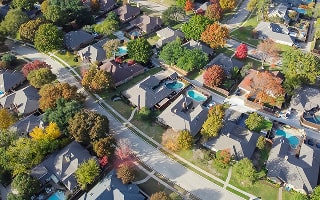
The Texas Residential Construction Liability Act (RCLA) governs residential construction in Texas. This law outlines the rights and responsibilities of homeowners and contractors. It includes requirements for notice of defects, a Right to Repair clause, and a statute of limitations for filing claims. Some of the key elements of this law include:
- Notice Requirement: A homeowner must give the contractor 60 days' notice of the defect before filing a lawsuit. This notice is called a demand letter and describes the defect, its impact, and any supporting evidence.
- Right to Repair: The RCLA gives contractors the right to inspect and repair any alleged defects before a lawsuit is filed.
- Statute of Limitations: The RCLA outlines specific timeframes for filing claims, which can vary based on the type of claim (e.g., breach of contract, negligence, product liability). A general statute of limitations for construction defects is four years for breach of contract or warranty, and two years for product liability or negligence.
- Statute of Repose: There's also a statute of repose, which sets a final deadline for filing claims, regardless of when the defect was found. For construction defects, this is typically ten years from the date of substantial completion.
- Contractor Notice Requirements: Contractors must include a mandatory notice in their contracts, outlining the provisions of the RCLA, in at least 10-point boldface font.
Safety Standards

Texas's building safety standards are based on state law, which sets the minimum requirements for both residential and commercial buildings. Local governments can use the state standards or adopt stricter ones. These standards deal with things like structural integrity, electrical systems, plumbing, energy efficiency, and fire safety. Some of the details include:
- Structural Integrity: Texas building codes ensure homes and buildings can withstand various loads, including wind, dead loads, and live loads. This includes regulations for hurricane straps, roof bracing, and wind-resistant materials.
- Electrical Systems: Texas uses the National Electrical Code (NEC) for residential electrical systems to ensure safe wiring, proper grounding, and correct circuit breaker capacity.
- Plumbing: These laws also include provisions for plumbing systems to ensure proper sanitation, including regulations for water heaters, pipe materials, venting, and waste disposal.
- Energy Efficiency: Texas requires new homes to meet energy efficiency standards outlined in the International Energy Conservation Code (IECC), which includes insulation, window and door efficiency, and heating/cooling systems.
- Fire Safety: The State Fire Marshal's Office uses the National Fire Protection Association (NFPA) 101 Life Safety Code and NFPA 1 Fire Code for inspections, ensuring buildings meet fire safety standards.
Building Codes

Texas does not have statewide building codes except for industrialized buildings. Instead, cities and counties adopt their own building codes based on the International Building Code (IBC) and International Residential Code (IRC). These codes regulate the construction, alteration, relocation, and maintenance of industrialized buildings.
Building codes vary widely based on the local jurisdiction. Before building or renovating, construction professionals must check with the local building department for specifics.
Asbestos Laws

Texas asbestos laws are designed to keep the public safe. They do so by regulating the handling of asbestos-containing materials (ACM) in public buildings during construction, renovation, demolition, or any activity that may disturb the materials. Some details of this law include:
Before any renovations or demolition, licensed asbestos professionals must perform an asbestos survey identifying the presence of ACM and the risks involved with disturbing it.
Building owners must notify the Texas Department of State Health Services (DSHS) before any demolition or renovations that involve ACM. They must also pay a notification fee based on the amount of asbestos to be removed.
Anyone involved in asbestos-related activity in public buildings must be licensed and registered with the DSHS. This list includes asbestos inspectors, abatement contractors, consultants, and others.
Licensed asbestos abatement contractors must perform any asbestos abatement in public buildings. Abatement methods must comply with federal and state regulations, including the National Emission Standards for Hazardous Air Pollutants (NESHAP). An independent third party must perform area and project clearance monitoring.
The laws above apply to public and commercial buildings. Private residences and apartments with four or fewer units are exempt, as are federal buildings and military installations.
The DSHS, along with other agencies, enforces asbestos regulations in Texas. Violations of asbestos regulations can result in penalties, including fines.
Contractor Licensing Laws

As a general state rule, contractors do not need to be licensed in Texas to work in the trade. The exception to this is skilled contractors like plumbers, electricians, and HVAC professionals who do need to be licensed through the Texas Department of Licensing and Registration. Some cities and towns also require contractors to be licensed. Some examples include:
- Austin, Texas: Austin requires contractors to register with the Building and Trade Contractor Services. Some trade workers need licenses to operate.
- Dallas, Texas: Dallas requires general contractors to register themselves, and specialty workers like mechanics, plumbers, and electrical contractors must register and show proof of their state license.
- Houston, Texas: Houston also requires contractors to register with the city before performing any work within city limits.
- San Antonio, Texas: Contractors must register with the Development Services Department before obtaining a work permit. Demolition contractors require specific licenses to do their work.
- Portland, Texas: Portland requires contractors to register with the city's Development Services department.
Insurance & Bonds

Texas does not have statewide standardized requirements for insurance and bonds for contractors. The city or county typically sets these. However, on average, most jurisdictions require $300,000 per occurrence and $600,000 aggregate, with some projects requiring higher limits, like $5 million combined for general liability and umbrella coverage.
Any contractors who employ workers or subcontractors must also carry workers' compensation insurance. Most contractors use vehicles, which must be insured with roughly $1 million liability coverage.
The state does not require bonds, but many cities and counties do. Typically, they range from $1,000 to $25,000 and guarantee that contractors will adhere to local regulations, building codes, and contractual agreements. Performance and payment bonds are required for larger projects, especially those involving public works. These bonds ensure the project is completed and payments go to subcontractors and suppliers. Some areas also require permit bonds, which are generally a flat fee or a percentage of the permit value. Permit bonds guarantee compliance with permit conditions.
Public Works Contracts/Public Bidding

Texas requires that most public works projects be competitively bid. In this case, the state will advertise the project, open the bidding process, accept bids, review them, choose the lowest bidder or best fit for the project, and award the contract. Some are rewarded for the "best value" rather than the lowest price.
Additionally, municipalities with expenses over $3,000 but less than $50,000 are legally obligated to contract with two historically underutilized businesses on a rotating basis.
Some of the highlights of public works law in Texas are:
-
![]() Prevailing Wage: Contractors must pay their employees according to the local prevailing rate or face penalties.
Prevailing Wage: Contractors must pay their employees according to the local prevailing rate or face penalties.
-
![]() Performance and Payment Bonds: Cities may require performance and payment bonds for public works projects.
Performance and Payment Bonds: Cities may require performance and payment bonds for public works projects.
-
![]() Job Order Contracting: Public works projects use this type of method for recurring maintenance, repair, or minor construction work with indefinite delivery dates.
Job Order Contracting: Public works projects use this type of method for recurring maintenance, repair, or minor construction work with indefinite delivery dates.
-
![]() Professional Services: Texas does not allow contract awarding for certain professional services based solely on competitive bidding.
Professional Services: Texas does not allow contract awarding for certain professional services based solely on competitive bidding.
-
![]() Electronic Bidding: Contractors can submit bids electronically.
Electronic Bidding: Contractors can submit bids electronically.
-
![]() Retainage: Claims for retainage on public works contracts are limited to a certain percentage (typically 10%) of the contract amount.
Retainage: Claims for retainage on public works contracts are limited to a certain percentage (typically 10%) of the contract amount.


Renovations
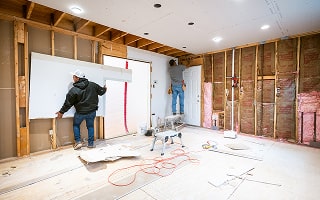
Unlike many states, Texas does not have a statewide law on renovations; it leaves it up to local jurisdictions to adopt their own building codes and regulations regarding residential renovations. Cities and counties use a foundation based on the International Residential Code (IRC) and other relevant codes, such as the International Building Code (IBC) for commercial projects, the International Energy Conservation Code (IECC), the National Electrical Code (NEC), and the International Existing Building Code (IEBC).
Permits are generally required for most renovations and major repairs that involve walls, floors, ceilings, windows, doors, electrical, mechanical, and plumbing systems. Some exceptions include painting, flooring, and cabinet replacement or small projects (e.g., sheds under 200 sq ft, decks under 30 inches high, fences under 7 feet tall). Since each local jurisdiction has its own laws, you must verify before beginning work or applying for permits.
Environmental Laws

Texas has some strict laws regarding building and environmental concerns. The goal of these regulations is to protect the environment and public health. The Texas Commission on Environmental Quality (TCEQ) is a primary agency responsible for administering many of these regulations.
Some of the key areas of this law include:
Stormwater Discharges
Construction projects that disturb one acre or more of land and discharge stormwater to surface waters require a construction general permit (CGP) (TXR150000) from the TCEQ. Before starting construction, CGP holders must develop and implement a stormwater pollution prevention plan (SWP3), which details best management practices (BMPs) to control pollutants in stormwater runoff.
Based on the size of the disturbed area, permit requirements vary. For example:
- Small construction activities (1-5 acres or part of a common plan disturbing 1-5 acres): Require SWP3 and a construction site notice.
- Large construction activities (five or more acres or part of a common plan disturbing five or more acres) require a SWP3, a Notice of Intent (NOI), and an ample construction site notice.
Many cities and towns in Texas have additional stormwater ordinances that construction projects must comply with.
Water Supply and Drinking Water
Building or operating a public water system (PWS) requires TCEQ approval to ensure it's technically and financially stable and provides safe drinking water. A licensed engineer must submit plans for new PWS or significant changes to existing ones for TCEQ review before construction starts. Before establishing continuous water service for new construction, Texas law requires an inspection to ensure the safety of the private water-distribution system.
Construction and Demolition (C&D) Waste
Some Texas cities have rules requiring C&D projects to divert waste from landfills.
For example, the city of Austin's C&D Recycling Ordinance requires projects larger than 5,000 square feet to divert at least 50% of the waste or dispose of no more than 2.5 pounds per square foot in the landfill.
Endangered Species
In Texas, projects must be surveyed for the potential habitat of rare, threatened, or endangered species before construction begins. If a potential habitat is discovered, construction professionals must take extraordinary precautions to avoid disturbing it. To accomplish this, they must involve the U.S. Fish and Wildlife Services (USFWS) and the Texas Parks and Wildlife Department (TPWD) if any state-listed or federally listed species might be affected. If a project results in incidental harm or harassment of a listed species, the contractor must obtain a permit under the Endangered Species Act. Additionally, for non-federally authorized projects that have the potential for incidental harm of a federally listed species, the contract must create a Habitat Conservation Plan (HCP) for a Section 10 permit from the USFWS.
Solar Regulations

Texas solar regulations combine state and local guidelines to ensure the safety and compliance of solar systems when installed and operated. Some of the highlights of these laws include:
State Level
-
![]() Solar Rights Act (HB-362): The Solar Rights Act limits the power of homeowners' associations (HOAs) and property owner associations (POAs) to prohibit or restrict the installation of solar systems. This means that HOAs cannot ban the installation of solar panels, although they can impose reasonable aesthetic standards.
Solar Rights Act (HB-362): The Solar Rights Act limits the power of homeowners' associations (HOAs) and property owner associations (POAs) to prohibit or restrict the installation of solar systems. This means that HOAs cannot ban the installation of solar panels, although they can impose reasonable aesthetic standards.
-
![]() Senate Bill (SB) 1626: This bill further strengthens solar rights by preventing developers from prohibiting homeowners from installing solar panels in residential subdivisions, but only if the development consists of 50 or fewer units and is during the development period.
Senate Bill (SB) 1626: This bill further strengthens solar rights by preventing developers from prohibiting homeowners from installing solar panels in residential subdivisions, but only if the development consists of 50 or fewer units and is during the development period.
-
![]() Texas Department of Licensing and Regulation (TDLR): The TDLR oversees the licensing of professionals installing solar panels, ensuring they meet the necessary technical qualifications and safety standards. Anyone installing solar panels in Texas for residential and commercial projects must have a Texas Electrical Contractor's License (TECL) from the TDLR.
Texas Department of Licensing and Regulation (TDLR): The TDLR oversees the licensing of professionals installing solar panels, ensuring they meet the necessary technical qualifications and safety standards. Anyone installing solar panels in Texas for residential and commercial projects must have a Texas Electrical Contractor's License (TECL) from the TDLR.


Local Level
-
![]() Permits: Most Texas cities or counties require permits for solar panel installations to ensure they comply with local building codes and safety standards. The permitting process involves submitting an application, providing detailed plans, and then undergoing inspections.
Permits: Most Texas cities or counties require permits for solar panel installations to ensure they comply with local building codes and safety standards. The permitting process involves submitting an application, providing detailed plans, and then undergoing inspections.
-
![]() Building Codes: Each local government adopts and enforces its own building codes, which may include specific requirements regarding solar panels. For example, some cities have adopted solar-ready provisions from the International Residential Code (IRC).
Building Codes: Each local government adopts and enforces its own building codes, which may include specific requirements regarding solar panels. For example, some cities have adopted solar-ready provisions from the International Residential Code (IRC).
-
![]() Zoning: Some areas have zoning restrictions regarding the placement or size of solar panels, particularly for ground-mounted systems.
Zoning: Some areas have zoning restrictions regarding the placement or size of solar panels, particularly for ground-mounted systems.


Depending on the project type, all solar panel installations must comply with both electrical codes (such as the National Electrical Code—NFPA 70) and building codes (such as the International Residential Code or International Building Code).
Gas/Oil

Texas has standard building codes related to gas and oil installations in buildings. These rules have been adopted and amended from the International Code Council (ICC) codes and ASHRAE standards.
The General Codes used include:
-
![]() Uniform Mechanical Code (UMC): Texas generally follows the Uniform Mechanical Code, which sets requirements for mechanical equipment like HVAC systems and exhaust vents in new and existing buildings.
Uniform Mechanical Code (UMC): Texas generally follows the Uniform Mechanical Code, which sets requirements for mechanical equipment like HVAC systems and exhaust vents in new and existing buildings.
-
![]() International Fuel Gas Code (IFGC): This code governs the installation of gas piping and appliances.
International Fuel Gas Code (IFGC): This code governs the installation of gas piping and appliances.
-
![]() International Mechanical Code (IMC): This code addresses mechanical systems, including oil-fired heating equipment.
International Mechanical Code (IMC): This code addresses mechanical systems, including oil-fired heating equipment.
-
![]() International Residential Code (IRC): This code applies to one- and two-family dwellings and incorporates gas and oil heating installation requirements.
International Residential Code (IRC): This code applies to one- and two-family dwellings and incorporates gas and oil heating installation requirements.
-
![]() International Building Code (IBC): This code governs commercial and multi-family residential structures and addresses relevant aspects of heating systems.
International Building Code (IBC): This code governs commercial and multi-family residential structures and addresses relevant aspects of heating systems.
-
![]() National Electrical Code (NEC): This standard dictates electrical wiring and connections for heating equipment.
National Electrical Code (NEC): This standard dictates electrical wiring and connections for heating equipment.
-
![]() ASHRAE 90.1: Texas adopted this standard for commercial and multi-family residential buildings, focusing on energy efficiency in buildings, lighting, and mechanical systems.
ASHRAE 90.1: Texas adopted this standard for commercial and multi-family residential buildings, focusing on energy efficiency in buildings, lighting, and mechanical systems.


Specific Regulations for Gas Heating:
- Appliances: These regulations concern the proper installation of gas appliances, including ventilation, connections to piping, and combustion air.
- Floor Furnace Restrictions: Floor furnaces have specific restrictions regarding placement, clearance from walls, floors, and surrounding objects like draperies.
- Unit Heater Clearance: Unit heaters have specific clearances from combustible materials.
- Unvented Appliance Limitations: There are limitations on the input rating of unvented appliances within a room or space.
- Gas Piping Size: The volumetric flow rate of gas to be provided should be based on the sum of the maximum input of the appliances, with adjustments for altitude where necessary.
- Ignition Source Elevation: Equipment with ignition sources must be elevated to a specific height above the floor in areas like garages and hazardous locations.
- Appliance Access and Service: Adequate access and working space around appliances are required for inspection, service, repair, and replacement.
Specific Regulations for Oil Heating:
- Fuel Oil System Sizing: The fuel oil system needs to be sized according to the maximum capacity of fuel oil required, with specific minimum sizes for supply and return lines.
- Oil-Fired Appliance Listing and Installation: Oil-fired floor and wall furnaces must be listed, labeled, and installed according to their listing, manufacturer's instructions, and code requirements.
- Oil-Fired Boiler Installation: Requirements include proper listing, installation according to the manufacturer's instructions, sufficient clearances, and including necessary valves, controls, and connection safeguards.
- Piping and Storage: These rules address the sizing, installation, and depth of underground fuel oil piping, as well as the need for proper grounding of equipment.
- Chimney and Vent Connectors: Specific requirements exist for passing chimney and vent connectors through walls or partitions, including using listed wall pass-through devices or following clearance requirements.
Electricity

Although Texas does not have statewide building codes, each local area adopts their own codes from the International Residential Code (IRC), the Texas IHB (Industrialized Housing and Buildings) Building Code, which is based on the International Building Code (IBC), and the electrical code based on the National Electrical Code (NFPA 70).
Texas's State Energy Conservation Office (SECO) establishes minimum energy efficiency standards for new and substantially renovated buildings. Texas uses the 2023 edition of the National Electrical Code (NFPA 70).
Government Housing Programs
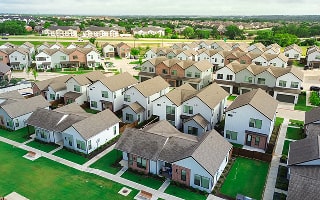
Texas offers many different types of government-funded housing programs. The Texas Department of Housing and Community Affairs (TDHCA) administers most of these programs, providing affordable housing options and support services to low-income families, individuals with disabilities, and those experiencing or at risk of homelessness. These programs are as follows:
- Section 8 Housing Program: Texas's Section 8 housing program provides rental assistance to low-income individuals or families, including those with disabilities or older people. The program is designed to help these people afford decent, safe, and clean housing.
- Public Housing: Texas's Public Housing Agencies (PHAs) offer housing opportunities to low-income families and individuals.
- HOME Investment Partnership Program (HOME Program): A federal program administered by TDHCA, focused on expanding the supply of affordable housing and strengthening public-private partnerships.
- Housing Stability Services Program: The Housing Stability Services Program provides services like legal assistance, outreach, shelter, and community services to help households maintain or obtain stable housing.
- Single Family Programs: The TDHCA administers various programs through this division, assisting individuals experiencing or at risk of homelessness, focusing on housing and other related services.
- Rapid Re-housing: Texas's Rapid Re-housing program aims to quickly move individuals and families experiencing homelessness into permanent housing with short-term assistance and support.
- Permanent Supportive Housing (PSH): This program provides long-term housing and support services to individuals with disabilities or those experiencing homelessness.
- Housing Resource Clearinghouse: Another TDHCA resource that helps individuals find organizations providing financial assistance for home buying, rent payments, or home repairs.
- Rental Assistance Providers: This is a TDHCA resource that helps locate organizations that offer rental assistance programs in specific areas.
- 211 Texas: The 211 Texas program provides information and referrals for various housing and social services, including emergency shelter, transitional housing, and rapid re-housing.
- Texas State Affordable Housing Corporation (TSAHC): The Texas State Affordable Housing Corporation offers down payment assistance and mortgage tax credits to help individuals purchase homes throughout the state.
- DHA Housing Solutions for North Texas: A Public Housing Authority serving seven North Texas counties that provides affordable housing and resources.
- Dallas County Housing Programs: Offers residents rental assistance and homeownership counseling services.
- Homeowner Assistance Fund (HAF) Program: A TDHCA-administered program to prevent mortgage delinquencies and foreclosures due to COVID-19.
Property Tax Credits and Incentives

Texas offers several property tax credits and incentives to help lessen the property tax burden for some homeowners and businesses. They are as follows:
-
![]() General Residence Homestead Exemption: The General Residence Homestead Exemption reduces the taxable value of a homeowner's primary residence, lowering their tax liability. The standard exemption offers a minimum $100,000 reduction from the home's value for school district taxes.
General Residence Homestead Exemption: The General Residence Homestead Exemption reduces the taxable value of a homeowner's primary residence, lowering their tax liability. The standard exemption offers a minimum $100,000 reduction from the home's value for school district taxes.
-
![]() Over 65 Disabled Homestead Exemption: For homeowners who are 65 or older or disabled, this exemption offers an extra $10,000 exemption for school district taxes and can potentially freeze school district tax amounts at the rate they were at when the homeowner first qualified.
Over 65 Disabled Homestead Exemption: For homeowners who are 65 or older or disabled, this exemption offers an extra $10,000 exemption for school district taxes and can potentially freeze school district tax amounts at the rate they were at when the homeowner first qualified.
-
![]() Disabled Veteran Homestead Exemption: Disabled veterans may qualify for exemptions based on their disability rating. Those with a 100% rating may receive a full exemption from property taxes.
Disabled Veteran Homestead Exemption: Disabled veterans may qualify for exemptions based on their disability rating. Those with a 100% rating may receive a full exemption from property taxes.
-
![]() Surviving Spouse Benefits: Surviving spouses of eligible veterans or individuals who qualified for the Over-65 or Disabled exemption may also be eligible to continue receiving these benefits.
Surviving Spouse Benefits: Surviving spouses of eligible veterans or individuals who qualified for the Over-65 or Disabled exemption may also be eligible to continue receiving these benefits.


Business Tax Incentives
- Property Tax Abatement Act (Chapter 312): This incentive allows local taxing authorities (not school districts) to provide tax abatements for up to 10 years to encourage economic development. These abatements exempt increases in the value of the property from taxation.
- Taxable Value Limitations (Chapter 313): Similar to abatements, these limitations provide temporary property tax incentives to businesses.
- $500 Exemption for Business Personal Property and Mineral Interests: Texas delivers a $500 exemption for these property types.
- Write-off of Property Taxes for Businesses: Commercial landlords and self-employed individuals who own property used for business operations may be able to deduct property taxes as a business expense.
- Manufacturing Exemptions: Manufacturers may be exempt from sales and use tax on tangible personal property used directly in manufacturing.
- Agricultural Appraisal: Property used for farming or ranching may qualify for an agricultural appraisal, reducing its taxable value based on use.
- Renewable Energy Exemptions: Installing solar or wind energy systems can lead to exemptions that lower a property's taxable value.
- Homeowner Assistance Fund (HAF) Program: This program, managed by the Texas Department of Housing and Community Affairs, provides aid to eligible homeowners facing financial difficulties due to COVID-19 to help with overdue property taxes, mortgage payments, and other expenses.
Local jurisdictions handle tax incentives and exemptions. Contact your local property assessor for more information about what is available in your local area.
Local Level (Permits and Regulations)
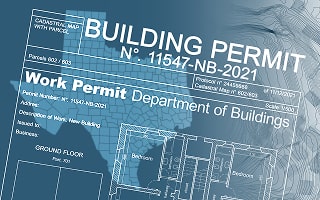
In Texas, the majority of building codes and related regulations are set and enforced by local government (cities, towns, and counties). These municipalities have a lot of power and control as long as they comply with the International Building Code (IBC) and the International Residential Code (IRC), which sets the minimum standards for things like safety. Along with developing and enforcing building codes, local building offices in Texas also issue building permits, perform inspections, and institute zoning regulations. You can check the city or county website for information on the local building department and other related offices.
Some examples of cities that have adopted various building codes or portions of them include:
- Texas City, TX: As of September 1, 2024, Texas City adopted the 2024 editions of various International Codes (IBC, IRC, IMC, IPC, IECC, IFGC, IPMC, IEBC, IFC, ISPSC) and the 2023 National Electrical Code (NEC).
- Cibolo, TX: Cibolo's building code amendments include the 2021 editions of many International Codes and the 2023 NEC.
- Austin, TX: Austin adopted the 2021 codes with proposed updates to the 2024 codes.
Building-Friendly Areas of Texas

Some Texas areas offer more "building-friendly" conditions for various reasons, whether you're looking to build a new home, develop a property, or invest in real estate. The reasons are varied. In Texas, areas with potentially less strict building laws are rural counties and unincorporated areas outside city limits. Cities and incorporated areas often have more detailed zoning regulations and building codes. Houston, in particular, is known for not having formal zoning laws, though it does utilize land-use ordinances and deed restrictions.
Some examples of areas with less strict laws include:
- Rural Counties: These areas often have less stringent building codes and fewer zoning restrictions than cities, allowing for more flexibility for new construction.
- Unincorporated Areas: Land outside the city limits generally has fewer regulations than land within city boundaries.
- Houston, TX: While not entirely devoid of rules, Houston is notable for its lack of formal zoning laws. Instead, it relies on land-use ordinances and deed restrictions, making it a great place to build.
Some of the stricter areas are Austin, Dallas, and coastal cities like Rockport.
Where to Obtain Texas Building Permits

Contractors and property owners can obtain building permits in Texas through the city or county's building department. Many of these offices offer online applications, status checking, and inspection scheduling through MGO Connect. The process for getting a building permit in Texas is as follows:
- Identify the jurisdiction from which you need the permit (where the building or land is located).
- Check the building department website or try the online portal to apply.
- Find the correct application for the permit you need.
- Complete it and submit it with the supporting documentation.
- Pay the permit fee.
- Wait for the building department to review it and approve it.
- Schedule your inspection.
Some links to other building departments in Texas include:
- Aransas Pass Building Department
- City of Allen Building and Permitting Department
- City of Dallas Building Inspection
- City of Deer Park Building Department
- City of Fort Worth Building Development Services
- City of Galveston Building Division
- City of Katy Permit and Building Services
- City of Richmond Building Department
- Houston Permitting Center
- Plano Building Permits
- Town of Highland Park Building Inspection
During the permitting process, the building inspector must come out and review the work being performed. They may do this before, during, and after the project to ensure the work complies with all local building codes to keep people safe. Depending on the city or county's rules, you may schedule your inspections through the online portal, by phone, or by email.
Zoning Laws
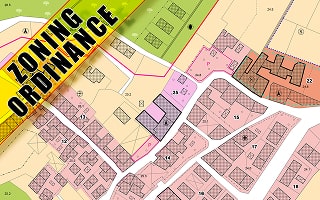
Texas zoning laws are established and enforced at the local level. Cities and towns create their own according to what is best for the community. Zoning laws vary significantly from area to area. Counties have some limited zoning authority; specifically, they can regulate land use in unincorporated areas. Some examples of Texas zoning laws include:
- Chapter 211 of the Texas Local Government Code: Grants municipalities the power to zone property.
- Section 211.001: States that the purpose of zoning is to promote public health, safety, morals, and general welfare, as well as protect historical and cultural areas.
- Section 211.003: Allows municipalities to regulate building height, lot coverage, yard sizes, and population density.
- Section 211.005: Allows municipalities to divide the city into districts and regulate the use of buildings and land within those districts.
Houston, Texas, is unique because it has no city-wide zoning laws. However, it does have regulations for land subdivision.
Some of the zoning designations used for land throughout Texas include:
-
![]() Residential (R): This consists of residential dwellings, including single-family homes, duplexes, and multi-family buildings. Zoning rules designate lot sizes, building heights, and setbacks.
Residential (R): This consists of residential dwellings, including single-family homes, duplexes, and multi-family buildings. Zoning rules designate lot sizes, building heights, and setbacks.
-
![]() Commercial (C): Commercial zoning applies to businesses, offices, and retail shops. Areas may be further divided into "light commercial" (C-1) or "heavy commercial" (C-2).
Commercial (C): Commercial zoning applies to businesses, offices, and retail shops. Areas may be further divided into "light commercial" (C-1) or "heavy commercial" (C-2).
-
![]() Industrial (I): Industrial areas support warehouses, manufacturing plants, and other industrial buildings. They, too, have light and heavy designations. For example, heavy industrial covers factories, refineries, or other high-impact activities. These areas have stricter zoning laws due to the noise, emissions, and traffic issues.
Industrial (I): Industrial areas support warehouses, manufacturing plants, and other industrial buildings. They, too, have light and heavy designations. For example, heavy industrial covers factories, refineries, or other high-impact activities. These areas have stricter zoning laws due to the noise, emissions, and traffic issues.
-
![]() Agricultural (AG): Agricultural zoning is for farming or ranching. Texas has a strong agricultural industry, and zoning laws are in place to protect it from urban encroachment.
Agricultural (AG): Agricultural zoning is for farming or ranching. Texas has a strong agricultural industry, and zoning laws are in place to protect it from urban encroachment.
-
![]() Mixed-Use (MU): Mixed-use is becoming more common in Texas, especially in urban areas where residential homes are mixed with commercial businesses. Sometimes, these areas even include industrial buildings.
Mixed-Use (MU): Mixed-use is becoming more common in Texas, especially in urban areas where residential homes are mixed with commercial businesses. Sometimes, these areas even include industrial buildings.
-
![]() Planned Development (PG): This may be used for unique zoning plans for a specific project. It is generally used when none of the other designations fit the space.
Planned Development (PG): This may be used for unique zoning plans for a specific project. It is generally used when none of the other designations fit the space.


Austin, Texas, has some distinct zoning codes, like SF-3, for single-family residential homes. The city uses GR for general retail and CS for commercial services.
Dallas, Texas, uses the code R-7.5(A) for single-family lots of 7,500 square feet. It uses the code CR for commercial retail and LI for light industrial.
San Antonio, Texas, has a wide range of codes, including R-4 for single-family homes on small lots and C-2 for light commercial buildings.
Related Links and Enforcement Offices

When it comes to Texas construction, renovation, building, and housing regulations, many government departments and agencies standardize, regulate, and enforce building rules. Some overlap with their duties, but most in Texas are on the local level. The state agencies tend to set broad minimum standards, and then the cities, towns, and counties customize and adopt from there.
The links below provide detailed information on the state's construction, zoning, renovating, and housing rules.
Other Helpful Links
- Texas Department of Licensing and Registration (TDLR)
- Texas Building Codes
- Texas Department of Housing and Community Affairs - Minimum Construction Standards
- International Code Council (ICC)
- ASHRAE Standards
- Texas State Energy Conservation Office (SECO)
- National Electrical Code
- Texas State Affordable Housing Corporation (TSAHC)
- Texas State Law Library
- International Existing Building Code
- National Emission Standards for Hazardous Air Pollutants (NESHAP)