How To Search for Wichita Falls Property Records

You should always review property records before buying or investing in real estate in Wichita Falls. They provide a wealth of information, including ownership history, appraised values, tax details, liens, zoning designations, foreclosures, building features, and other crucial details needed for conducting thorough due diligence. Property records are considered public records in Wichita Falls, meaning they can generally be viewed or copied by anyone. The main challenge is knowing where to look. We have provided a list of key resources below to help you locate different types of Wichita Falls property records.
Wichita County Clerk

The Wichita County Clerk serves as the recorder and custodian of deeds, deeds of trust, liens, plats, easements, maps, and other official documents related to property ownership and transfers in the City of Wichita Falls. The clerk provides an Online Document Search tool that you can use to access these records. Searches may be done via several criteria, including name, recording date, and document number. Note that you may need to register an account for certain online services, such as purchasing non-watermarked copies of records. You can also search and request copies of records in person at the clerk's office, located at 900 7th St., Room 250, Wichita Falls, TX 76301 (fees may apply). You can call (940) 766-8100, option 1, for additional information or assistance.
Wichita Appraisal District

The Wichita Appraisal District identifies, classifies, and values all real property in Wichita Falls, and is a primary source for comprehensive property information, including ownership details, valuation history, building characteristics and legal descriptions, recent sales data, and more. The appraisal district offers a Property Search tool that can be used to look up this information online. Searches are primarily done by name, address, or property ID, with additional options available to further refine results. There is also a Map Search tool that can be used to visualize and review parcel boundaries and property details across Wichita Falls and the rest of Wichita County. You may also visit the appraisal district's office at 600 Scott Ave., Suite 300, Wichita Falls, TX 76301 for in-person services, or contact them at (940) 322-2435 or wcad@wadtx.com for inquiries and general assistance.
Wichita County Tax Office
The Wichita County Tax Office handles property tax billing and collection for the City of Wichita Falls. This office is the key resource for information on tax bills, current balances, payment history, delinquent taxes, and other tax-related property information. You can use the office's Property Tax Search tool to look up this information online; searches may be done by account number, name, address, or appraisal district number, with additional options for filtering results. In-person services are also available at the tax office, located at 600 Scott Ave., Suite 103, Wichita Falls, TX 76301, and you can call (940) 766-8200 for assistance or general inquiries.
Wichita County Courts System

The Wichita County Courts System (primarily the District and County Courts at Law) is a valuable resource for property records tied to legal matters in Wichita Falls. These include title and boundary disputes, foreclosure filings, landlord-tenant cases, and civil judgments that affect property use within the city. You can search these records online using either the county's judicial records search tool or the state-provided Re:SearchTX portal (registration and fees may be required). You may also visit the Wichita County Courthouse at 900 7th Street, Wichita Falls, TX 76301, to search and request copies of records in person. Please note that copy fees may apply. You can call the Wichita County District Clerk at (940) 766-8100, option 5, or the County Clerk at (940) 766-8100, option 1, for assistance and general inquiries.
Wichita Falls Property Taxes
Property taxes in Wichita Falls are a vital source of funding for essential local government services, such as public schools and libraries, public transportation, police and fire departments, road and infrastructure maintenance, parks and recreation, and trash collection. The Wichita Appraisal District values real property in the city for taxation purposes, while the Wichita County Tax Office bills and collects tax payments. Property values are assessed based on market conditions, property characteristics, and recent comparable sales. These assessed values are then multiplied by the combined tax rate set by local taxing authorities (the city, county, school districts, and other relevant entities) to calculate final tax bills.
Property owners are usually mailed tax statements by October, with payments due by January 31st of the following year (or the next business day if the 31st falls on a weekend or holiday). Late payment penalties are imposed immediately after the deadline and begin accruing monthly interest. The county may ultimately initiate foreclosure proceedings for properties with long-term delinquent taxes to recover the owed amounts. You can pay your Wichita Falls property taxes through several methods, including online, mail-in, over the phone by calling 1-866-511-6677 (have your account number and bureau code "7580933" ready), and in person at the county tax office. You can call (940) 766-8200 for additional information or assistance.
![]() Assessments
Assessments

The Wichita Appraisal District conducts annual assessments of properties in Wichita Falls to establish market values for tax purposes. Property values are determined using mass appraisal techniques, which include analyzing recent sales of comparable homes (sales approach), estimating construction and replacement costs (cost approach), and reviewing potential income for income-producing properties (income approach). The appraisal district may also use physical inspections, aerial imagery, and permit records to ensure that valuations remain accurate and up to date. Properties are generally assessed at 100% of their market value, meaning that taxes are calculated using the full market estimate rather than a reduced percentage.
Property owners are sent notices of appraised value by April 15th, outlining their property's assessment as of January 1st of that year. If you believe that your property has been incorrectly assessed, you can request an informal review with the appraisal district. If the issue cannot be resolved informally, you may file a formal protest with the Wichita County Appraisal Review Board. Note that protests must be filed by May 15th or within 30 days of the mailing date on the notice of appraised value, whichever is later. You can call (940) 322-2435 for additional information or assistance with the valuation protest process.
![]() Appraisals
Appraisals

Wichita Falls assessments work similarly to appraisals. They both determine the fair value of property by comparing similar properties with others in the local area that have sold recently. In cases of odd structures or new construction, the county may call upon an appraiser to help determine the value. Estate planners, courts, and lenders also use appraisals to value real property.
![]() Tax Rates
Tax Rates

Wichita Falls, Texas, has a median effective property tax rate of 1.90%, above both the national median of 1.02% and the Texas state median of 1.67%. However, the city's average annual tax bill is $2,342, slightly below the national average of $2,400.
Here's a look at how Wichita Falls' tax rate compares to other counties in Texas:
- Bexar County 2.03%
- Collin County 1.49%
- Dallas County 1.74%
- El Paso County 2.01%
- Grayson County 2.09%
- Harris County 1.66%
- Kendall County 1.25%
- Lubbock County 1.86%
- McMullen County 1.12%
- Potter County 2.16%
- Starr County 0.79%
- Stonewall County 3.00%
- Tarrant County 1.70%
- Travis County 1.65%
- Webb County 1.54%
- Winkler County 1.22%
![]() Exemptions
Exemptions

Even though property taxes in Wichita Falls align with national averages, some residents may find it difficult to meet their annual tax obligations. Fortunately, there are several tax relief programs available to qualifying homeowners to help reduce their overall tax burden. These include:
-
Homestead Exemption: This reduces the taxable value of a homeowner's principal residence.
-
Over 65/Disabled Exemption: Available to homeowners aged 65 or older, individuals with qualifying disabilities, and their surviving spouses.
-
Disabled Veterans Exemption: Offers partial or full property tax relief for veterans based on their disability rating. Surviving spouses of service members killed in action and first responders who died in the line of duty may also qualify.
You can contact the Wichita Appraisal District at (940) 322-2435 for additional information on available tax relief programs, eligibility requirements, or help with the application process.
Wichita Falls Building Permits/Inspections
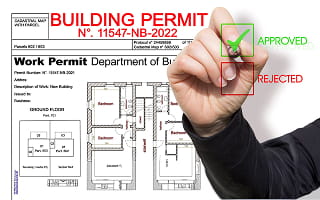
Permits are required for most building-related projects in Wichita Falls, including new construction, enlargement, alteration, demolition, home improvement, and repairs. Certain minor repairs and cosmetic upgrades, such as installing new flooring or cabinets, painting, and replacing fixtures or faucets, are usually exempt, provided the work does not affect the building's structure or core systems. The Wichita Falls Development Services Department oversees the city's permitting process. Application forms are available on the department's website, and submissions can be made at its Building Inspections Division's Office, located at 1300 7th Street, Wichita Falls, TX 76301. You can also contact the division at (940) 761-7459 for general inquiries and assistance.
Common types of permits issued in Wichita Falls include:
-
Building Permits: Required for new construction, structural modifications, renovations, and repairs to residential and commercial properties.
-
Demolition Permits: Required for partially or totally tearing down existing buildings and structures.
-
Electrical Permits: Required for new wiring, service upgrades, lighting system installations, and other work involving electrical systems and equipment.
-
Mechanical Permits: Required for installing, replacing, or modifying heating, ventilation, and air conditioning (HVAC) units and related mechanical systems and equipment.
-
Plumbing Permits: Required for installing or modifying water lines, sewer connections, fixtures, gas piping, and related work involving plumbing systems and equipment.
When applying for any of these permits, you must submit the proper documentation (building plans, blueprints, contractor licenses, materials lists, etc.). You must also pay the appropriate fee.
Building inspections are part of the permit process, and they ensure that the work complies with local building and safety codes. You can schedule an inspection through the online portal or in person at the office during regular business hours.
Real Estate in the City of Wichita Falls
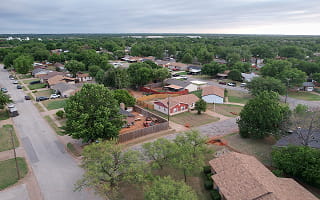
Wichita Falls is the county seat of Wichita County and serves as a major regional center for the surrounding ranching and oil-producing communities. Located in North Texas near the Oklahoma border, it is often referred to as the "Gateway to Texas". The city is famous for several unique landmarks and institutions, including the "World's Littlest Skyscraper," the 54-foot waterfall marking its entrance along the Wichita River, Midwestern State University, and Sheppard Air Force Base, one of the largest and most diversified training bases in the Air Force. It also offers a rich mix of cultural and outdoor attractions, including the River Bend Nature Center, the Kemp Center for the Arts, the historic Kell House Museum, Lucy Park, and the annual Hotter'N Hell Hundred bicycle race.
Wichita Falls, Texas, has a population of 102,316 residents and 43,762 housing units; roughly 87% of these units are occupied, and 56% are owner-occupied. The city offers a wide variety of housing options, including single-family homes, townhomes, duplexes, apartments, and multi-family units, with common housing styles like Ranch, Craftsman, Traditional, Modern, and Contemporary. The average home value in Wichita Falls, TX, is $168,124, representing a 1.1% decrease from previous years. Note that actual values can vary considerably depending on the neighborhood. Here are examples of home prices in different parts of the city:
- Allendale $138,000
- Country Club Estates $315,000
- Faith Village $145,000
- Lakeside City $294,000
- Southwest Parkway $175,000
- Tanglewood $225,000
- University Park $195,000
- Westview $155,000
The Wichita Falls, Texas, real estate market is a somewhat competitive, buyer-friendly market. Homes typically go under contract in around 54 days of listing, and approximately 19% of listed homes sell above the listing price.
Searching across multiple government offices and databases to piece together a complete property profile can be time-consuming, but PropertyChecker simplifies the process by pulling key ownership details, tax records, transaction histories, and more into a single, easy-to-use platform. Whether you are buying, investing, or simply doing your due diligence, visit PropertyChecker.com to get the property information you need in minutes.