How To Search for Irving Property Records
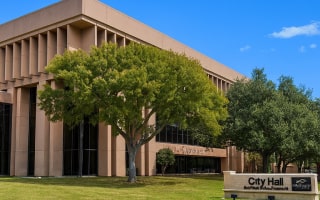
Irving's position within the Dallas-Fort Worth metroplex makes it an attractive real estate option. However, you should always check property records before buying or investing in property. They provide valuable details, such as ownership history, appraised values, liens, taxes, zoning information, foreclosures, and more. Irving property records are public, meaning anyone can view them or request copies. The key to finding what you need is knowing where to look. Use the list of resources below to search for Irving property records.
Dallas County Clerk

The Dallas County Clerk maintains copies of official records related to property ownership and transfers in Irving. These include deeds, mortgages, liens, plats, easements, maps, and more. The clerk's office offers a records search tool that you can use to look up this information online. There is a quick search option that lets you search by name, document type, number, or subdivision, and an advanced search option that offers additional search criteria. You can also search and obtain copies of these records in person at the clerk's records division office, located at Suite 2100, 500 Elm Street, Dallas, TX 75202. Note that copy fees may apply. You can call (214) 653-7099 for general information or assistance.
Dallas Central Appraisal District

The Dallas Central Appraisal District (DCAD) is responsible for identifying and valuing all taxable property in the City of Irving. The DCAD is an excellent resource for comprehensive property information, including ownership details, legal descriptions, features, valuations, sales histories, and more. You can use the appraisal district's property search tool to look up this information online; you can search by name (owner or business), account number, or address. There is also a property map tool that you can use to visually explore property boundaries, ownership details, and appraisal data across Irving (and the rest of Dallas County). You can also visit the appraisal district's office at 2949 North Stemmons Freeway, Dallas, TX 75247, for in-person services, or call their customer service line at (214) 631-0910 for general information or assistance.
Dallas County Tax Office

The Dallas County Tax Office is responsible for collecting property taxes for the City of Irving, making it an excellent resource for tax-related property records, including tax bills, payment history, current balances, and delinquency status. You can use the tax office's property tax lookup tool to search for this information by name, address, account number, and fiduciary number. You can set up a portfolio to group multiple tax accounts for easier review. Each portfolio can include one or more properties and shows key details like location, owner, and current and total taxes owed. You can also visit the tax office at Suite 3300, 500 Elm Street, Dallas, TX 75202 for in-person services, or call (214) 653-7811 for general information or assistance.
Dallas County Courts System

The Dallas County and District Courts are great resources for property records related to legal cases, including foreclosures, title disputes, landlord-tenant cases, and civil judgments. You can search these records online using the county's court case information search tool or through the state-provided Re:SearchTX tool (account registration is required for this option, and fees may apply). You may also access records in person at the Dallas County Courthouse located at the George L. Allen, Sr. Courts Building, 600 Commerce Street, Dallas, TX 75202. You can call the Dallas County District Clerk at (214) 653-7307 or the Dallas County Clerk at (214) 653-7099 for assistance and general inquiries.
Irving Property Taxes
Irving property taxes are a vital funding source for various local government services, including public schools, police and fire protection, road maintenance, libraries, parks and recreation, trash pickup, health programs, and more.
The Dallas Central Appraisal District establishes the taxable value of all real property in Irving, while the Dallas County Tax Office collects tax payments from property owners. Property values are established by evaluating market conditions, property characteristics, and recent comparable sales. The assessed value is then multiplied by the combined tax rate (set by the city, county, school district, and other local taxing entities) to calculate the final bills.
Tax statements are usually mailed in October and must be paid by January 31st of the following year. Taxes are considered delinquent if they aren't paid by this date and begin accruing penalties and interest immediately; the property may also be foreclosed if the taxes are left unpaid. The Dallas County Tax Office offers several options for paying your Irving property taxes, including online, by mail, or in person at any of its office locations across the county. You can call the office at (214) 653-7811 or email propertytax@dallascounty.org for more information or assistance.
![]() Assessments
Assessments

The Dallas Central Appraisal District (DCAD) assesses real property in Irving each year to determine its market value. These valuations are completed using mass appraisal methods. This generally involves comparing sales of similar homes, calculating construction costs, and analyzing potential earnings. The DCAD also uses physical inspections, aerial imagery, and permit reviews to ensure accurate valuations. Properties are assessed at 100% of their market value, meaning that a property's taxable value is based on its full estimated market value, not a discounted or partial amount.
Property owners typically receive a Notice of Appraised Value by mid-April, informing them of the assessed market value of their property (as of January 1st). If you disagree with the valuation, you may request an informal review with DCAD. If the issue isn't resolved, you can proceed with a formal protest with the Dallas County Appraisal Review Board by May 15th or within 30 days of the notice mailing, whichever is later. You can call the DCAD's customer service line at (214) 631-0910 or email the appraisal district's Tax Liaison Officer at TLO@dcad.org for inquiries and assistance with filing a protest.
![]() Appraisals
Appraisals

Irving assessments work similarly to appraisals. They both determine the fair value of property by comparing it with similar properties that have recently sold in the local area. In cases of odd structures or new construction, the county may call upon an appraiser to help determine the value. Estate planners, courts, and lenders also use appraisals to value real property.
![]() Tax Rates
Tax Rates

Irving, Texas, has a median effective property tax rate of 1.69%, higher than both the national median of 1.02% and the Texas state median of 1.67%. The city's average annual tax bill is $5,206, well above the national average of $2,400.
Here's a look at how Irving's tax rate compares to other counties in Texas:
- Bexar County 2.03%
- Collin County 1.49%
- El Paso County 2.01%
- Grayson County 2.09%
- Harris County 1.66%
- Kendall County 1.25%
- Lubbock County 1.86%
- McMullen County 1.12%
- Potter County 2.16%
- Starr County 0.79%
- Stonewall County 3.00%
- Tarrant County 1.70%
- Travis County 1.65%
- Webb County 1.54%
- Winkler County 1.22%
![]() Exemptions
Exemptions

Property taxes in Irving are higher than the national average, and some residents may have difficulties meeting their tax obligations. Fortunately, several tax exemptions are available to qualifying homeowners in the city that can help ease their tax burden. These include:
- Homestead Exemption: Reduces the taxable value of a homeowner's primary residence.
- Over-65/Disabled Exemption: Lowers the taxable value of the primary residence for seniors age 65 and older, individuals with qualifying disabilities, and their surviving spouses.
- Disabled Veterans Exemption: Offers partial to full property tax relief for disabled veterans, based on disability rating. Surviving spouses of service members killed in action and first responders who died in the line of duty may also qualify.
You can contact the Dallas Central Appraisal District at (214) 631-0910 for more information or help applying for exemptions.
Irving Building Permits/Inspections

You need a permit to construct, enlarge, alter, repair, move, or demolish buildings and structures in Irving. However, exemptions are usually granted for cosmetic work such as painting, carpeting, and installing cabinets, as well as minor work such as replacing fixtures and certain appliances at existing connections. Permits are issued by the Irving Inspections Department. You can apply for one, submit building plans, and schedule inspections online through the city's MGO Connect permit portal. You can also visit the inspections department's office located at City Hall, 2nd Floor, 825 W. Irving Blvd., Irving, TX 75060, for in-person services or call (972) 721-2371 for general information and assistance.
Common types of permits issued in Irving include:
-
General Building Permits: Required for constructing, altering, or demolishing structures.
- Residential Building Permits: Covers work on single-family homes, duplexes, and townhomes, including garages, fences, and accessory structures.
- Commercial Building Permits: Applies to office buildings, retail spaces, warehouses, and other non-residential developments.
- Fence Permits: Required for building new fences or repairing existing ones.
- House Moving Permits:Required to move buildings or structures that are over 8 feet wide within or through the city.
- Roof Permits: Required for roofing/reroofing over 100 square feet.
- Swimming Pool Permits: Required for installing or renovating swimming pools.
-
Trade Permits: Required for work on specific systems within a building.
- Electrical Permits: For wiring, panel upgrades, installing or replacing lighting systems, and other work involving electrical systems.
- Mechanical Permits: For installing, replacing, or modifying heating, ventilation, and air conditioning systems.
- Plumbing Permits: For installing, modifying, or repairing water lines, sewer connections, fixtures, gas piping, and other work involving plumbing systems.
- Solar Panel Permits: For installing solar panels and photovoltaic systems.
When applying for any of these permits, you must submit the proper documentation (building plans, blueprints, contractor licenses, materials lists, etc.). You must also pay the appropriate fee.
Building inspections are part of the permit process, and they ensure that the work complies with local building and safety codes. You can schedule an inspection through the online portal or in person at the office during regular business hours.
Real Estate in the City of Irving
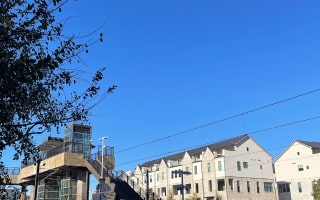
Located just northwest of Dallas and minutes from DFW International Airport, Irving is a principal city in the Dallas-Fort Worth metroplex and a major economic hub in North Texas. The city is home to Las Colinas, one of the nation's first master-planned communities. It also boasts several Fortune 500 companies, a thriving hospitality sector, and attractions like the Toyota Music Factory, the Mustangs of Las Colinas sculpture, the Irving Arts Center, and the Irving Convention Center at Las Colinas.
Irving, Texas, has a population of 256,684 residents. The city has 103,492 housing units, with approximately 92% occupied and 39% owner-occupied. The city offers a diverse mix of housing options, including single-family homes, townhomes, condos, apartments, luxury residences, senior living, affordable housing, and mixed-use developments. Popular housing styles include Mediterranean, Spanish Colonial, Ranch, Craftsman, Modern Urban, and Contemporary. The average home value in Irving, TX, is $338,248, down 4.1% from previous years. Note that actual home prices can vary considerably across areas in Irving. Here are examples of home values in different Irving neighborhoods:
- Bear Creek $362,861
- Cottonwood $468,168
- Irving Heights $276,602
- Las Colinas $528,024
- Northwest $343,186
- Pioneer $293,294
- Plymouth Park $291,918
The real estate market in Irving, Texas, is somewhat competitive. Even though prices have slightly dipped, the city's strong economy and desirable location continue to support long-term housing demand. Homes typically go under contract within about 24 days of listing, and about 19% of listed homes sell above the listing price.